Black Mold Removal in Vero Beach, FL
Black mold removal Vero Beach homeowners ask about usually starts with a dark patch and a question: is this the mold people worry about? Color alone cannot answer that question. Only inspection and laboratory work can confirm what is growing, and removal follows the same careful process used for other mold growth, with containment, cleaning, and drying at its center.
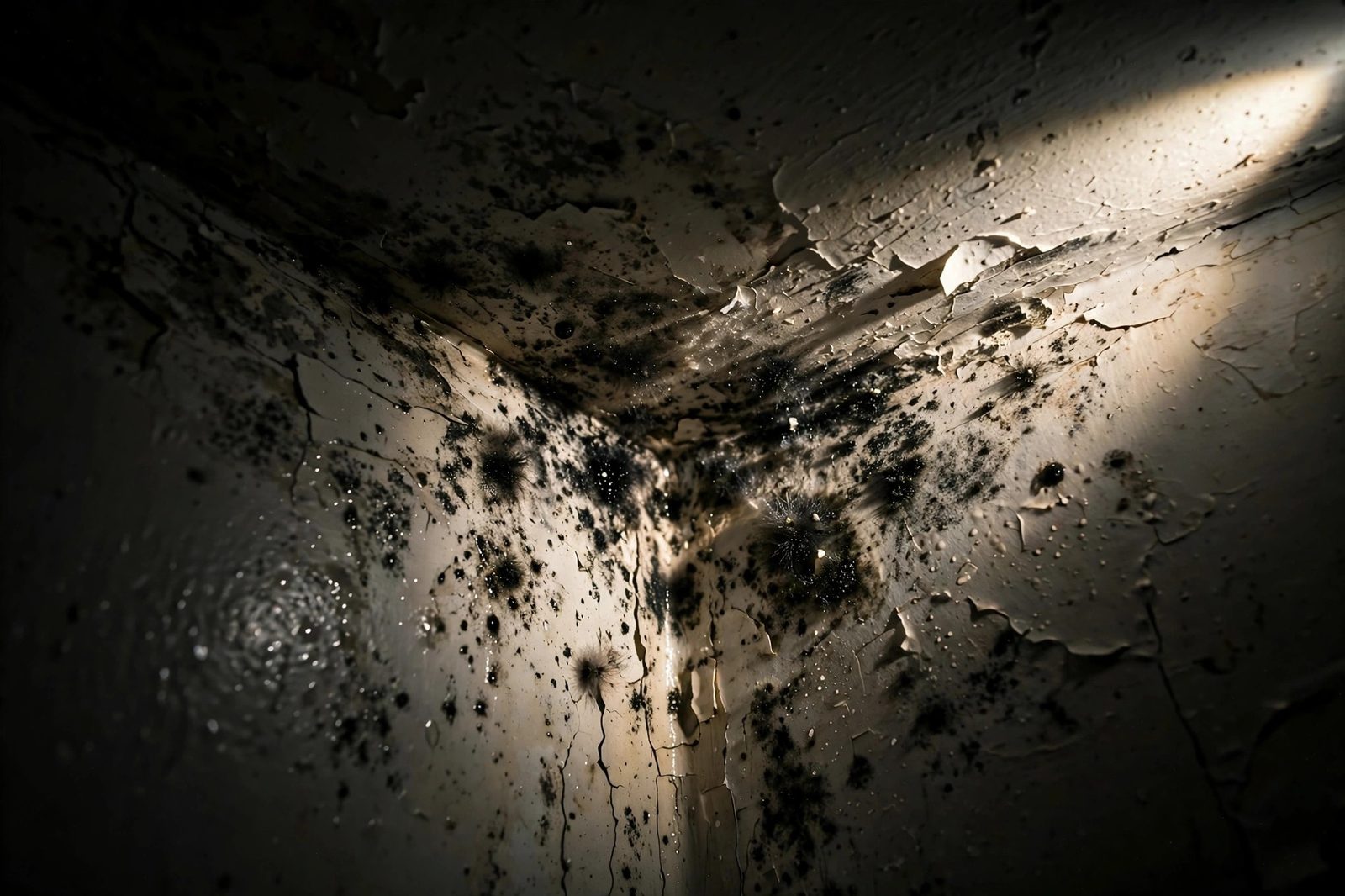
This page explains what black mold is, how it is confirmed, what signs point to a problem, how removal proceeds, what not to do, and when health questions should go to a health professional. For testing detail, see mold inspection and testing. For the wider service, see mold removal and remediation services.
What Black Mold Is
The term black mold is used loosely in everyday talk. In mold work, it usually points to a specific group of dark molds, and the name alone does not tell the full story.
Stachybotrys and other dark molds
Stachybotrys black mold is the name most often linked with the term black mold. Stachybotrys is one mold species among many, and other dark molds, including Aspergillus, Penicillium, and Cladosporium, can also appear dark to the eye. Mold species differ in appearance, growth habits, and the conditions they favor, which is why a visual guess is not an identification.
Mold colonies grow where moisture and organic material meet. Spore counts and species names from lab work describe what is present; they do not, on their own, describe health effects. Mycotoxins are compounds that some mold species can produce under certain conditions. Naming a species does not show that such compounds are present, and questions about exposure belong with a health professional.
Why color alone does not identify mold
Many mold species can look black, dark green, gray, or brown depending on the surface, the light, and the stage of growth. Dust, staining, and age can also change how growth looks. Color is a reason to look closer, not an identification of type.
That is why a black mold test relies on sampling and laboratory identification rather than appearance. A sample taken from the growth, examined in a lab, gives the name and count that a color check cannot.
How Black Mold Is Confirmed
Confirmation is a two-part process: a careful look at the property, then lab work on samples. Skipping either part leaves the question open.
Inspection and sampling
A mold assessment starts with a walk-through that notes visible mold growth, moisture readings, and the history of leaks and flooding at the property. A mold damage assessment adds a closer look at affected materials and the extent of growth, so the removal scope reflects what is actually present.
Sampling follows the inspection. Air and surface samples may be taken from the affected area and from nearby spaces, following the methods described on the mold inspection and testing page. Samples are sealed, labeled, and sent to a laboratory.
Laboratory identification
In the lab, analysts identify mold spores and mold species in each sample and report spore counts by type. Laboratory identification is what turns a dark patch into a named finding. Without it, dark growth remains unconfirmed, whatever its color.
Lab findings guide the mold remediation process, including how much containment is needed and which materials need removal or cleaning. Findings also support clearance testing later, when results are compared with starting conditions.
Signs of a Black Mold Problem
Signs of mold infestation vary. Some are easy to see, some are noticed only by odor, and some appear only in the history of a property. Any one sign is a reason to arrange an inspection, not a reason to disturb the area.
Visible growth and discoloration
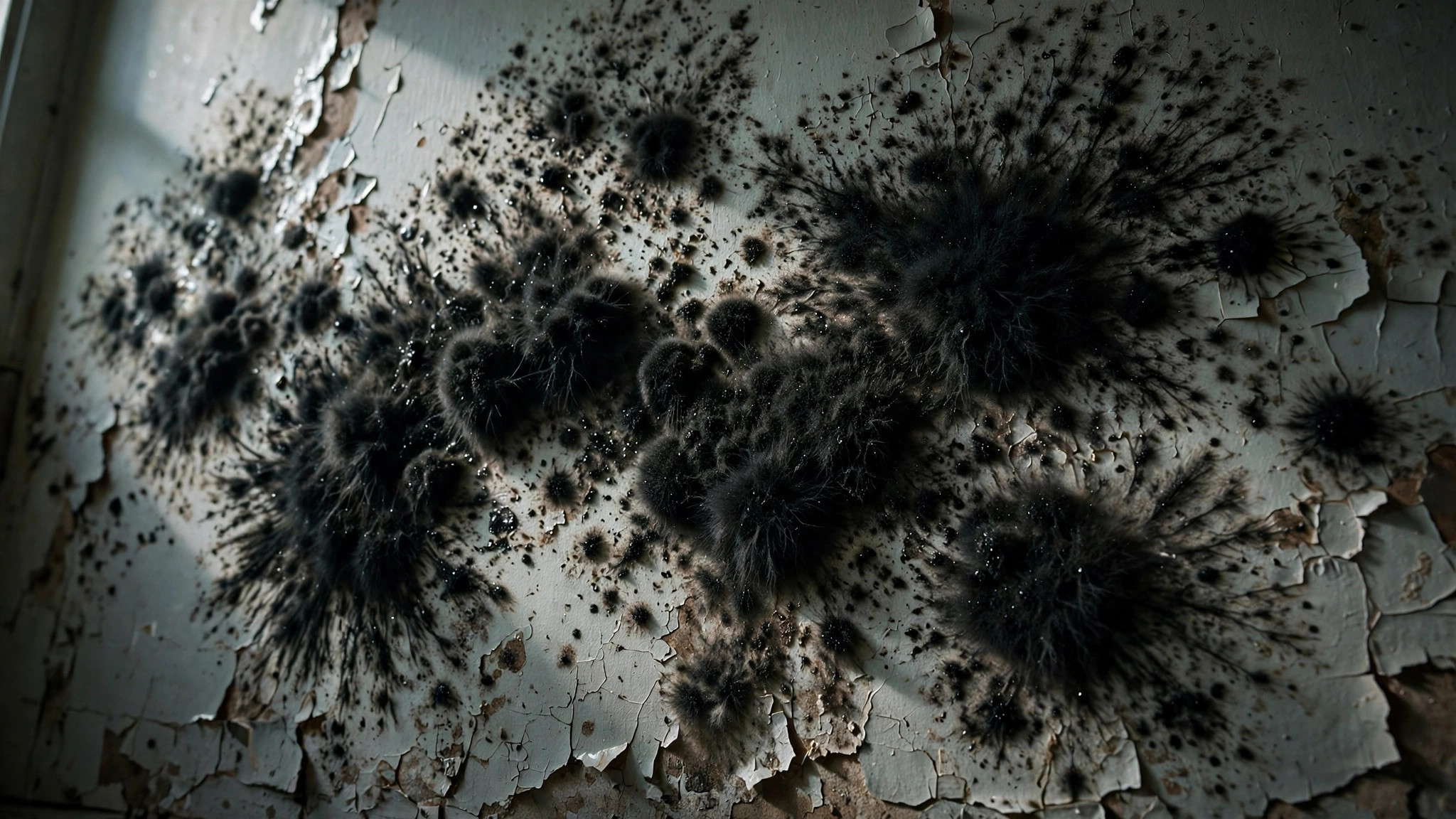
Visible mold growth may appear as dark spots, patches, or streaks on walls, ceilings, trim, or other surfaces. Discoloration alone is not proof of mold, since staining from past leaks can look similar. Growth that spreads, returns after cleaning, or sits near a known moisture source deserves a closer look.
Musty odor without visible growth
A musty odor that lingers in a room, fades when windows are open, or grows stronger near a wall or ceiling can signal hidden mold. Mold behind walls and mold in walls often produce odor before any growth breaks the surface, especially after a leak has wetted materials out of sight.
Odor without visible growth is a common reason to request air sampling and moisture detection, since both can point to a source that eyes cannot reach.
Water damage history
A history of leaks, flooding, or roof and plumbing failures raises the chance that mold after water damage is present, even when surfaces look dry. Water damage and mold often travel together, because damp materials behind walls and under flooring can stay wet long after the visible signs fade.
When describing a property's history to an inspector, mention past leaks, flooding, and any repairs that followed, along with dates in general terms and areas affected. A clear history helps the inspector choose where to look and sample.
The Black Mold Removal Process
The mold remediation process for black mold follows the same stages as other mold removal work, with care taken at each stage to limit spread. The stages below describe the usual order; the scope of each stage depends on findings and the protocol for the job.
Containment first
Mold containment comes first. Containment barriers of sheeting separate the work area from the rest of the home, and negative air pressure containment keeps air moving inward so spores are less likely to drift into clean spaces. HEPA air filtration units run inside the contained area to capture airborne particles.
Removal of affected materials
Contaminated material removal follows containment. Materials that cannot be cleaned, such as heavily affected wallboard or insulation, are removed, sealed in bags, and taken out through the contained route. Materials that can be cleaned are set aside for the next stage.
Cleaning and antimicrobial treatment
Remaining surfaces are cleaned, and antimicrobial treatments are applied where the protocol calls for them. Cleaning addresses visible growth and residue; treatment addresses what cleaning alone cannot reach on porous and semi-porous surfaces.
Drying and moisture control
Structural drying follows cleaning. Drying and dehumidification, using air movers and dehumidifiers, bring moisture levels down, and moisture readings confirm when materials have returned to a dry state. Moisture control matters after drying too: the leak or intrusion source must be fixed, or growth can return.
Clearance testing
Post-remediation clearance closes the process. Clearance testing, carried out by an independent party, checks visible conditions, moisture readings, and new samples against the protocol's goals. Clearance results are kept with the job records.
What Not to Do With Black Mold
The wrong first steps can spread spores or hide a problem without fixing it. Two habits deserve special attention.
Why bleach is not the answer
The short version is: never use bleach on mold. Bleach can lighten the color of surface growth while leaving growth and moisture in place, so the area can look clean while growth continues underneath. Bleach also adds moisture to the surface, which works against drying. Cleaning and treatment decisions belong in the remediation plan for the job, not in a household spray.
The DIY mold removal vs professional question comes down to scope, containment, and moisture control. Do-it-yourself approaches lack containment and drying equipment, and disturbing growth without containment can spread mold spores through the home. When growth is more than a small surface spot, or when hidden mold is suspected, professional help is the safer path.
Why fans and disturbance make it worse
Fans, sweeping, and scrubbing disturb mold colonies and release mold spores into the air. Once airborne, spores can settle in rooms that had no growth before. Until containment is in place, leave the area alone, keep doors closed where practical, and avoid running fans that blow across affected surfaces.
Health Concerns and Black Mold
Health questions about black mold deserve careful answers. This section describes what some people report and when to seek professional health advice. It does not describe medical conditions, and it does not state that any mold causes any specific illness.
Commonly reported symptoms
Some people report sneezing, coughing, irritated eyes or throat, headaches, and skin irritation when spending time in spaces with visible mold. Others report mold allergies that flare indoors. These experiences vary from person to person, many other causes can produce the same experiences, and a report of symptoms is not proof of a cause.
Anyone searching for respiratory irritation mold guidance because of symptoms they notice should talk to a health professional rather than relying on a web page for answers. Questions about the health risks of mold exposure should also go to a health professional, who can consider a person's full history.
When to talk to a health professional
Talk to a health professional when symptoms persist, worsen, or cause worry, when a household member has a health condition that raises concern, or when you need advice about occupying the home while work is planned. Bring notes about when symptoms appear and what you have observed in the home, so the conversation can be specific.
Mold work and health advice run on separate tracks. Inspectors and remediation firms address growth and moisture; health professionals address symptoms and care. Keeping those roles separate helps each question get the right kind of answer.
Frequently Asked Questions
Color alone cannot tell you. A mold assessment with sampling, followed by laboratory identification, is the way to confirm whether dark growth is Stachybotrys or another mold species. A black mold test through a lab gives a name and spore counts; a visual guess does not. If growth is dark and you are unsure, arrange an inspection and avoid disturbing the area in the meantime.
The stages are the same: assessment, containment, removal, cleaning, drying, and clearance testing. What can differ is the extent of containment, the amount of material removed, and how much sampling is used to confirm findings. Black mold removal follows the mold remediation process, with the protocol and clearance steps matched to what inspection and lab work show.
Get Help With Black Mold in Vero Beach
If you see dark growth, smell a musty odor, or know of past leaks and flooding, arrange a mold assessment before disturbing anything. Reach out through the contact page or call (772) 555-0134, and describe what you have found and the history of the property.
Homes in Vero Beach, Sebastian, and Fellsmere in Indian River County and across the Treasure Coast can start with mold inspection and testing, then move to removal with containment, cleaning, drying, and clearance testing. For prevention steps after removal, see mold prevention guidance, and for common questions, see the frequently asked questions page.
See the areas served around Vero Beach for coverage detail.